E420 · Food · Pharma · Cosmetic Grade

Sorbitol Bulk EU
Polyol That Works
Across Industries

Crystalline sorbitol (≥99.5%) for food formulation, oral care, pharmaceuticals and cosmetics. B2B supply from 25 kg, no minimum order — shipped across all EU-27 via DSV.

≥99.5%
Purity
E420
EU approved
25 kg
From one bag
EU-27
Delivery
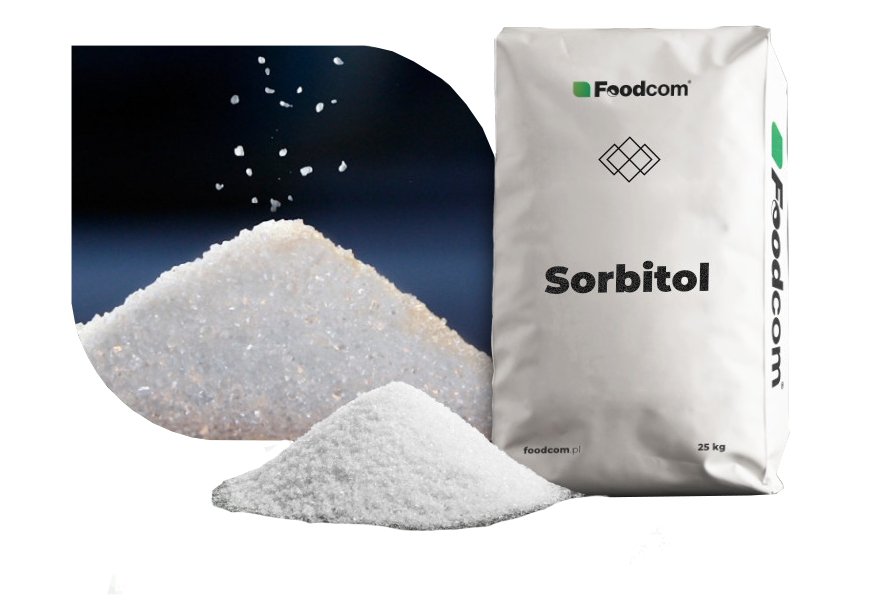
Sorbitol crystalline powder 25 kg bag OH OH OH OH OH C₆H₁₄O₆ — Sorbitol `"/>
99.5%+
Purity — food/pharma grade
25 kg
Min. bag size, no MOQ
E420
EU food additive number
0.97
Aw reduction (10% solution)
60%
Sweetness vs sucrose
EU-27
Delivery coverage
4 h
B2B inquiry response time
Industry Applications

Sorbitol Works Across
Five Major Industries

From bakery humectancy to toothpaste texture to pharmaceutical excipients — sorbitol's combination of water-binding capacity, mild sweetness and regulatory acceptance (E420) makes it one of the most versatile polyols on the market.

Sorbitol retains moisture in baked goods (soft cakes, muffins, tortillas), prevents crystallisation in confectionery, and functions as a sugar-free sweetener (E420). Typical use: 2–8% w/w. Compatible with HPMC, pectin, gelatin systems.

HumectantAnti-crystallisationSoftenerSugar-free label
Typical dose: 20–80 g/kg

The #1 humectant in toothpaste and mouthwash formulations. Sorbitol at 20–35% maintains paste texture, prevents drying, adds mild sweetness without cariogenicity. Non-fermentable by oral bacteria — key claim for dental products.

Non-cariogenicPaste textureHumectantMouthfeel
Typical dose: 20–35%

Excipient in syrups, chewable tablets, and liquid formulations. Sorbitol improves palatability, acts as a diluent, and provides mild laxative effect at higher doses (>50 g/day). Used in diabetic-suitable formulations — GI absorption is insulin-independent.

ExcipientSweetener syrupDiabetic-suitableLaxative >50g
Typical dose: 10–60%

Humectant and skin-conditioning agent in creams, serums, lotions. Attracts moisture to the stratum corneum. Compatible with most emulsifiers. INCI: Sorbitol. Well-tolerated, low sensitisation potential. CosIng approved, EWG score 1.

INCI: SorbitolEWG score 1HumectantSkin-conditioning
Typical dose: 2–10%

Energy source and palatability enhancer in aquafeed, poultry and swine diets. Reduces water activity in moist feed pellets, extending shelf life. Glucose-sparing effect — metabolised via sorbitol dehydrogenase pathway. Non-ruminant species preferred.

AquafeedPalatabilityEnergy sourceShelf-life
Typical dose: 0.5–3%
Technical Specification

Sorbitol — Physico-Chemical Parameters

Full specification compliant with EU Regulation (EC) No 231/2012 for food additive E420. Certificate of Analysis (CoA) provided with every order.

AppearanceWhite crystalline powder
Assay (dry basis)KEY≥ 99.5%
Specific rotation+0° to −2° (10% solution, 20°C)
Water content≤ 1.5% (Karl Fischer)
Reducing sugars≤ 0.3% (as glucose)
Residue on ignition≤ 0.1%
Lead (Pb)≤ 0.5 mg/kg
Arsenic (As)≤ 1 mg/kg
Melting point94–97 °C
pH (10% solution)4.5 – 7.0
Bulk density0.55 – 0.70 g/cm³
Solubility in waterKEY≈ 700 g/L at 25°C
Sweetness (vs. sucrose)≈ 60%
Caloric value2.6 kcal/g
E-numberKEYE420 (i) — EU approved
CAS number50-70-4
Data & Science

Sorbitol — Technical Data Charts

Formulators need numbers, not claims. Here are the key physico-chemical relationships that matter for your application.

Polyol Comparison — Sweetness & Hygroscopicity

Sweetness relative to sucrose (%) and hygroscopicity index. Sorbitol offers the best balance of moisture retention and cost for most food and cosmetic applications.

Water Activity vs Sorbitol Concentration

Aw reduction in aqueous solution. The 0.90 threshold (dashed) marks the point below which most spoilage bacteria are inhibited. Data at 25°C.

Viscosity of 70% Sorbitol Solution vs Temperature

Process-relevant for liquid formulations, toothpaste manufacturing and pharmaceutical syrups. Higher temperature reduces viscosity significantly.

Aw Calculator — Sorbitol Solution

Estimate water activity of your sorbitol solution. Adjust concentration and temperature to see real-time Aw prediction based on empirical sorbitol data.

20%
25°C
0.942
Estimated Water Activity (Aw)
⚡ Moderate Aw — most spoilage organisms inhibited
Competitive Positioning

Sorbitol vs Other Polyols —
Full Comparison

Key parameters compared across the most common polyols used in food, oral care and cosmetic formulation. Sorbitol highlighted for reference.

PolyolSweetness vs sucrosekcal/gAw (10% sol.)Hygroscopicity
SorbitolFOCUS
60%
2.60.97
85/100
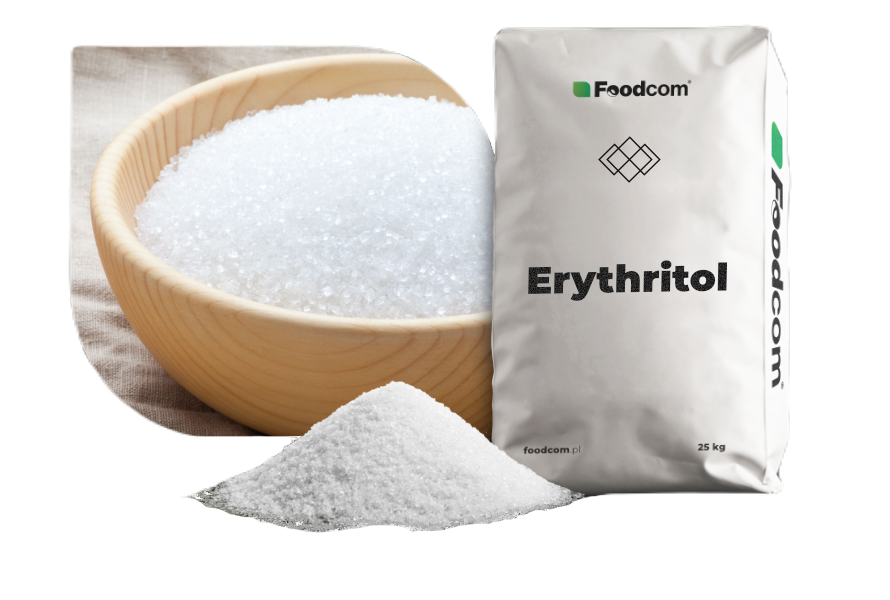
Erythritol
70%
0.20.985
35/100
Xylitol
100%
2.40.965
60/100
Maltitol
90%
2.10.975
70/100
Glycerol
60%
4.30.94
100/100
Mannitol
50%
1.60.99
20/100
EU-27 Delivery

Sorbitol Supplied Across All EU-27

Full-pallet and single-bag orders shipped via DSV road transport. Warehouse and dispatch hub in Warsaw, Poland. All 27 EU member states covered.

PL ★ Poland — FDCM warehouse & dispatch hub EU-27 — full delivery coverage via DSV road transport

Estimated Delivery Times

  • Central Europe (PL, DE, CZ, SK, AT)1–2 business days
  • Western Europe (FR, NL, BE, LU)2–3 business days
  • Southern Europe (IT, ES, PT, GR)3–5 business days
  • Northern Europe (SE, DK, FI)3–5 business days
  • Baltic States (EE, LV, LT)2–4 business days
  • Romania, Bulgaria, Hungary3–5 business days
  • Ireland, Cyprus, Malta5–7 business days

All shipments include CMR waybill, CoA, and customs documentation for intra-EU transport. ADR declaration available where applicable.

FDCM Portfolio

Complementary Raw Materials

More B2B ingredients supplied by FDCM across the EU.

FAQ

Frequently Asked Questions

Technical and logistical questions answered by our team.

FDCM supplies sorbitol from a single 25 kg bag with no minimum order requirement. Pallet quantities (typically 600–800 kg) attract volume pricing. Contact us for a quote on quantities above 1,000 kg.

Yes. Our sorbitol complies with EU Regulation (EC) No 231/2012 for food additive E420. It meets purity ≥99.5% (dry basis), and comes with full CoA, MSDS, and allergen declaration. Suitable for use in organic-labelled products subject to your certifier's approval.

Crystalline sorbitol (powder) offers easier dosing, longer shelf life, and lower transport cost per kg of active. Liquid 70% solution (sorbitol syrup) is preferred for continuous production lines, toothpaste, and liquid pharma formulations where dissolution step must be avoided. FDCM supplies crystalline powder form.

Sorbitol is hygroscopic and binds free water molecules, reducing the thermodynamic availability of water (Aw). At 10% w/w in solution, Aw ≈ 0.970; at 40%, Aw ≈ 0.848. This inhibits microbial growth (most spoilage organisms need Aw > 0.90) and extends shelf life without chemical preservatives.

Yes. Sorbitol is metabolised largely independently of insulin, making it suitable for diabetic formulations. Caloric value is 2.6 kcal/g vs 4 kcal/g for sucrose. However, EU labelling requires a laxative warning when >10 g sorbitol per serving is present ('excessive consumption may produce laxative effects').

Yes. E420 is the EU food additive designation for sorbitol (E420i) and sorbitol syrup (E420ii). It is permitted as a sweetener and humectant in a wide range of food categories under Regulation (EC) No 1333/2008, including fine bakery, confectionery, dietary foods, and chewing gum.

Sorbitol has significantly higher hygroscopicity (≈85 relative units) than erythritol (≈35). Sorbitol reduces Aw more effectively at the same concentration and is cheaper per kg. Erythritol is preferred when zero-calorie labelling is required and in applications where its cooling sensation is a benefit. For texture/moisture retention in baked goods, sorbitol is typically the more cost-effective choice.

Sorbitol at 20–35% w/w in toothpaste acts as: (1) humectant — prevents paste drying out in the tube; (2) plasticiser — controls paste rheology; (3) sweetener — improves mouthfeel without cariogenicity (not fermentable by Streptococcus mutans). It is the dominant polyol in most commercial toothpaste formulas globally.

Store in sealed original bags, dry conditions, temperature 15–25°C, away from direct sunlight and strong odour sources. Relative humidity should be kept below 65%RH — sorbitol is hygroscopic and will cake if exposed to moisture. Shelf life: 24 months from manufacture date when stored correctly.

Yes. FDCM ships to all 27 EU member states via DSV road transport. Delivery times: 1–3 business days for Central Europe (PL, DE, CZ, SK, AT), 3–5 days for Western Europe (FR, ES, IT, NL, BE), up to 7 days for peripheral markets (IE, PT, EE, LV, LT). Minimum shipment is one bag (25 kg).

Each delivery includes: Certificate of Analysis (CoA) with full physico-chemical parameters, Safety Data Sheet (SDS/MSDS), allergen declaration, and EU-compliant product specification sheet. Additional documents (Halal/Kosher certificates, GMO statement, origin declaration) available on request.

Partially. Both are polyol humectants but differ in viscosity contribution (glycerol: ≈1,412 mPa·s pure; sorbitol solution 70%: ≈110 mPa·s at 20°C), skin feel, and cost. Sorbitol gives a lighter, less sticky feel. In many rinse-off and leave-on cosmetics, a blend of sorbitol + glycerol (1:1 to 1:3) achieves optimal moisture retention and texture. Sorbitol is typically 30–50% cheaper per kg than cosmetic-grade glycerol.

Contact FDCM

Get a B2B Quote for Sorbitol

From a single 25 kg bag to full truckloads. We serve SMEs and large manufacturers across all EU-27 countries.

OPERATED BY

FDCM E-Commerce S.A.

Krzysztofa Komedy 2/3
02-517 Warszawa, Poland
VAT: PL5214100463

CONTACT

Sales & Inquiries

Email: contact@fdcm.eu
Website: fdcm.eu
Sorbitol on FDCM

EU DELIVERY

DSV Road Transport

EU-27 coverage · 1–7 business days
From 25 kg bags · Full pallets available
CMR waybill · CoA with every shipment

We respond to all B2B inquiries within 4 business hours